 AI Trends
 more
Today, Sakana AI updated “Sakana Marlin” with two new modes, “Twilight 2.0” and “Midnight 2.0,” offering greater research depth, speed, and breadth. We have also substantially redesigned the Microsoft PowerPoint slide export feature.
- Twilight 2.0: Examine multiple perspectives in less time
- Midnight 2.0: Make new discoveries with the broadest perspective
The existing Sakana Marlin will remain available as the lightweight “Sunlight” mode.

The ocean changes character with depth. Its shallow layer, reached by the sun’s rays, is called the “Sunlight zone”; the layer reached by only a small amount of light is the “Twilight zone”; and the deep layer where no light reaches at all is the “Midnight zone.” Research is similar: some information is available at the surface, while certain structures become visible only by diving deeper. The three mode names are derived from these ocean layers.
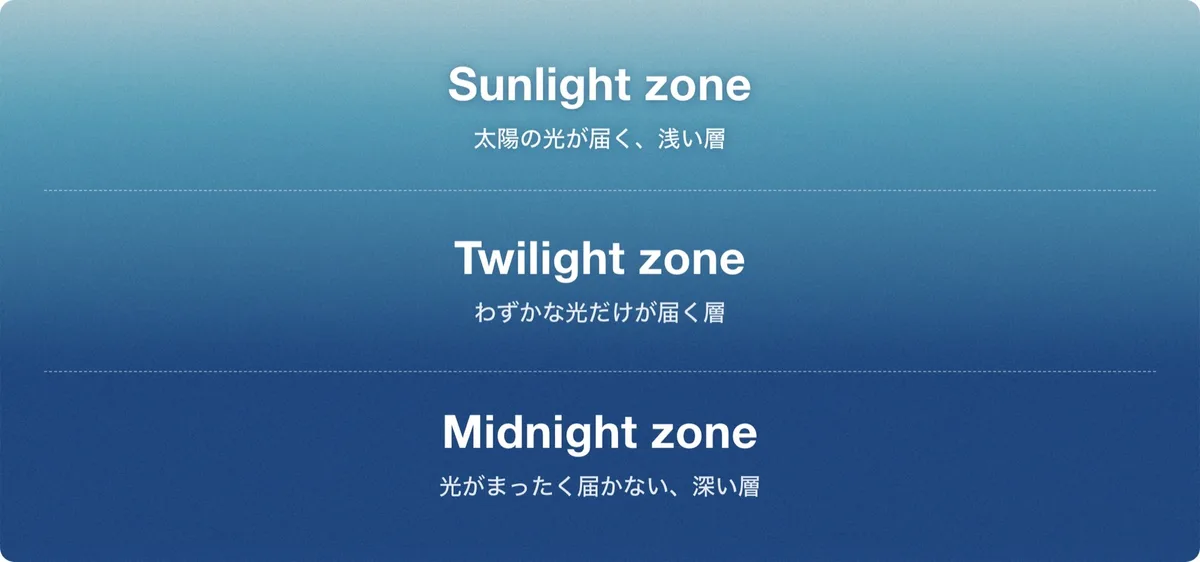
The ocean layers that inspired the names of the three modes
The Sakana Marlin concept
The concept behind “Sakana Marlin,” released in June this year, is: “Leave research to AI. Let humans focus on decision-making.” As a strategic research agent that autonomously handles everything from hypothesis development and information gathering to verification and report writing based solely on a research brief, it has supported people confronting important decisions in uncertain environments.
Since its launch, it has been used for a wide range of work, including strategy development, market and competitive analysis, and research into regulatory trends. In September, we added “Interactive Reading,” which lets users converse with AI while moving between reports and their sources, as well as PowerPoint slide exports, enhancing the experience of deeply understanding research findings and confidently turning them into the next action.
Meeting the need for both depth and speed
As adoption has expanded, we have received many requests for even higher standards of research depth, speed, and breadth.
- Quickly grasp the big picture before a meeting
- Obtain deeper analysis and a wider range of perspectives in an area you already know well
The priorities vary depending on the purpose and stage of the research, from an initial overview to an in-depth exploration of a specialized field.
At the same time, AI technology is evolving rapidly. “Inference-time scaling,” which improves output quality by allocating more computation during inference, has become a mainstream approach in AI development over the past few months, and Sakana Marlin has been built on this principle from the outset (for technical details, seeour blog post from the beta release).
However, as we explained at the time, results do not improve in direct proportion to the amount of computation. In real-world research, where there is no single correct answer, evaluating quality—determining what constitutes good research—is itself extremely difficult. Repeating inference without well-defined evaluation criteria does not produce consistently high-quality output. “Making AI think longer” and “making AI think better” are by no means the same thing.
1. New modes, “Twilight 2.0” and “Midnight 2.0”: Faster, deeper, and broader
This update combines the expertise we have developed in inference-time scaling with methods for evaluating AI output in complex, advanced knowledge work. By performing more extensive reasoning than before, it achieves a level of depth and breadth that can offer new insights even to experts in the field.
In the new modes, AI uses information gathered during the research process to reformulate its own questions and continue exploring more deeply as it updates its hypotheses. Instead of jumping too readily to a single conclusion, it repeatedly tests questions such as “Can we really say that?” and “Could there be another possibility?” We have embedded the very mindset of asking “What constitutes good research?” into the research process.
Including the existing Sunlight mode, you can choose among three modes to balance speed and depth according to your needs.
- Twilight 2.0:Quickly and broadly captures the overall picture and structure of the subject. It is ideal when you need to identify key issues before your next meeting or rapidly survey an unfamiliar field for a new project.
- Midnight 2.0:Offers comprehensive coverage of key issues, deep exploration, and rigorous verification. It is ideal when you want to uncover new insights in a field you already know or when thorough substantiation and expert-level analysis are required.
- Sunlight:This is the existing Sakana Marlin. It will remain available for general use cases where you want to complete research at a lower cost.
Each research task consumes 100 credits in Sunlight and 300 credits in either Twilight 2.0 or Midnight 2.0.
Twilight 2.0 consults approximately three times as many sources as Sunlight while completing research over an hour faster. Midnight 2.0 consults approximately seven times as many sources and generates reports about five times as long.
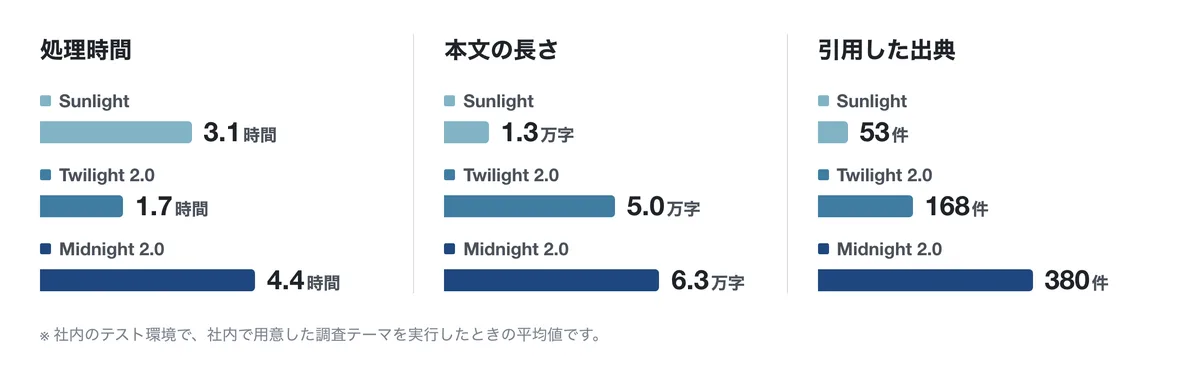
Processing time, body-text length, and number of cited sources for the three modes
To use a new mode, simply select it when submitting a research request.
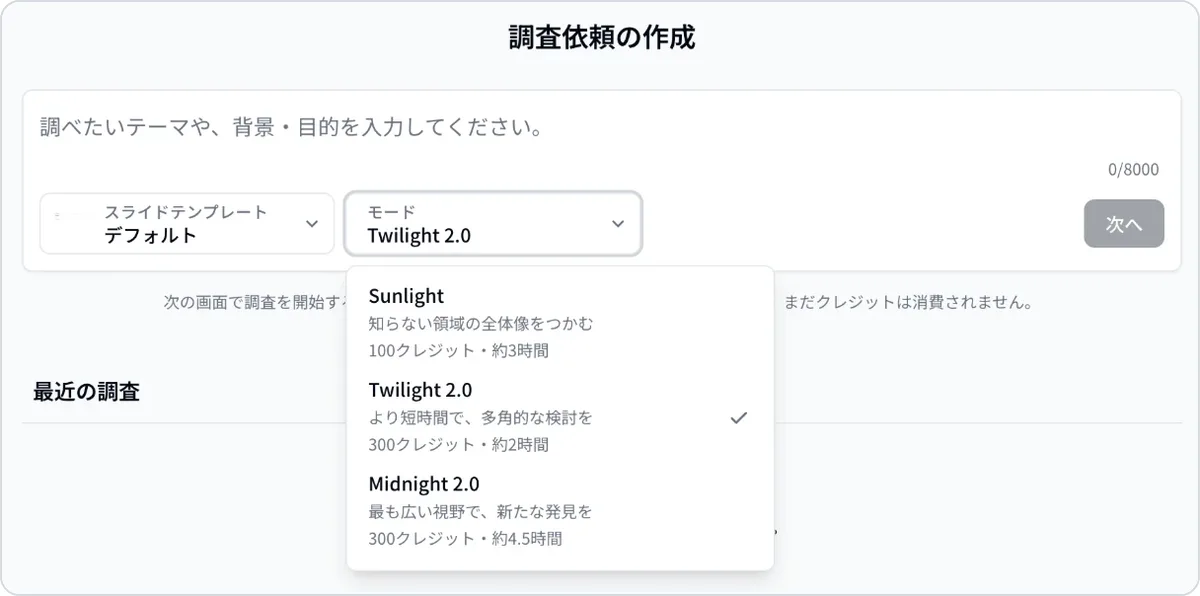
Select a mode when submitting a research request
2. Redesigned slide exports: Convey the key points of a long report through slides alone
The second update is a redesign of PowerPoint slide exports. It is available in all modes: Sunlight, Twilight 2.0, and Midnight 2.0.
The deeper research enabled by Twilight 2.0 and Midnight 2.0 has also increased report length. When there is not enough time to read an entire report or when sharing it in a meeting, concise slides that distill the key points are more important than ever.
To make it possible to grasp the full scope of the research from the slides alone, we fundamentally enhanced the generation process. We developed a new harness for AI agents to create slides and incorporated the expertise needed to produce professional-quality materials. The agent reads the entire report, designs the narrative, assembles the slides, and then reviews and refines its own output.
The slide deck begins with a title page, table of contents, and executive summary, presenting the entire report as a single coherent story. Each slide opens with a lead sentence that clearly states its key message; structures and causal relationships are visualized in diagrams, while quantitative data is organized into charts accompanied by source URLs. We continue to support internal and client-specified slide templates, allowing the same content to be exported in the required format.
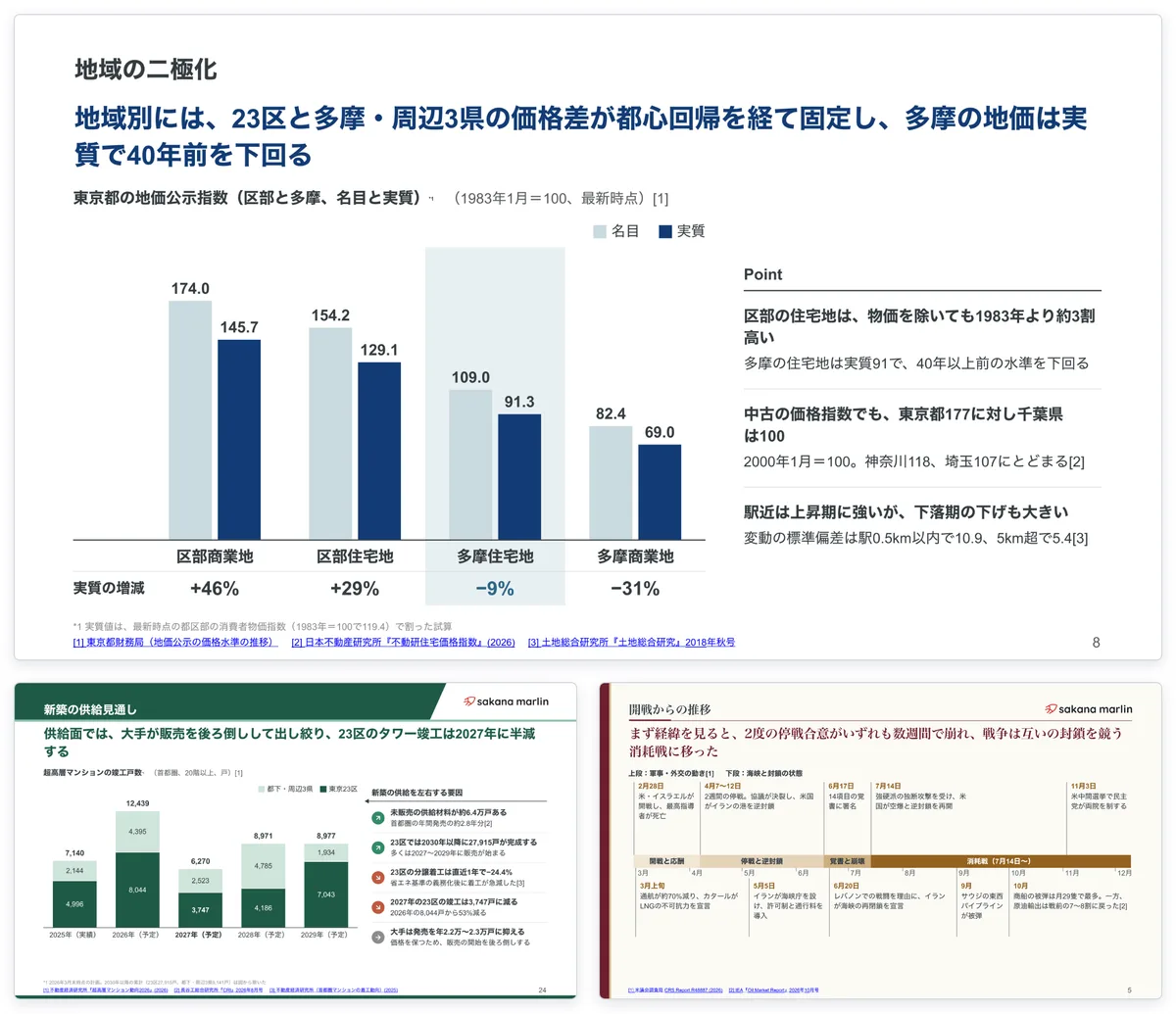
Examples of the new slide output
No matter how in-depth the research, it cannot inform decision-making if it is not communicated effectively. “Research deeply” and “communicate concisely”: the new slides are an update designed to deliver both through a single research request.
View the sample report
The best way to see how the output has changed with the new modes is to view an actual report. On the product page, we have published a sample report and slide deck created by Sakana Marlin. Please download them and take a look.
View the sample report: https://sakana.ai/marlin/#usecase
Sakana AI will continue working toward a future in which humans and AI operate in harmony to enable advanced decision-making.
Sakana Marlin offers plans ranging from usage-based pricing to Team and Enterprise plans.Pricingandcredit consumption for each mode, as well as the latest information, are available on the product page.
Try Sakana Marlin: https://sakana.ai/marlin/
Latest Sakana Marlin news: https://sakana.ai/marlin/news/
* Microsoft and PowerPoint are trademarks of the Microsoft group of companies.
Sakana AI
Sakana AI is looking for people who want to shape the future of AI with us. Please see ouropen positions.

English Announcement
Sakana Marlin Update: Twilight 2.0 and Midnight 2.0, Two New Modes for Faster and Deeper Research, plus Redesigned Slides
Today Sakana AI is updating Sakana Marlin with two new research modes, Twilight 2.0 and Midnight 2.0, that raise the depth, speed and breadth of its research. We have also substantially improved the quality of the slides it exports in Microsoft PowerPoint format.
- Twilight 2.0: More angles, in less time
- Midnight 2.0: The widest view, for new discoveries
The Sakana Marlin you have been using remains available as Sunlight, a lighter mode.

The ocean changes with depth. The shallow layer that sunlight reaches is called the sunlight zone, the layer where only faint light arrives is the twilight zone, and the deep layer that no light reaches at all is the midnight zone. Research is similar: some information can be found near the surface, and some structures only come into view when you dive deep. The three modes take their names from these layers of the sea.
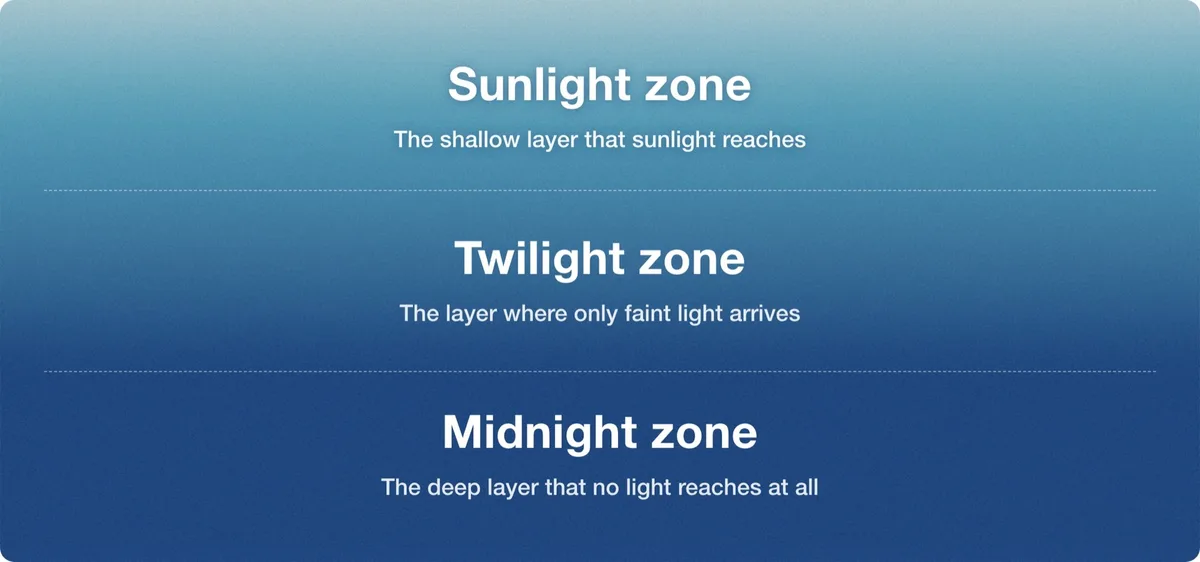
The layers of the sea that give the three modes their names
The Idea Behind Sakana Marlin
When we launched Sakana Marlin in June, we described it in a single line: leave the research to AI, so people can focus on the decision making. Sakana Marlin is a strategic research agent. Give it a topic, and it works autonomously from framing hypotheses through gathering and testing evidence to writing up the findings as a report, in support of people facing big decisions in uncertain times.
Since launch, it has been used for strategy work, market and competitor analysis, regulatory research and much else. In September we added Interactive Reading, which lets you move between a report and its sources while talking with the AI, and PowerPoint slide export. With them we have been strengthening the experience of understanding the findings deeply, confirming them and turning them into action.
Answering the Call for Both Depth and Speed
As more people came to rely on Sakana Marlin, we heard more and more requests for a higher standard of depth, speed and breadth:
- “Before a meeting, I want to grasp the big picture quickly.”
- “In a field I know well, I want analysis that goes further, and more angles on the question.”
From a first overview to a deep dive in a specialist field, which of these matters most depends on the purpose and the stage of the research.
AI technology has been moving quickly too. Over the past few months, inference-time scaling, in which a system spends more compute at inference time to raise the quality of its output, has been moving into the mainstream of AI development. Sakana Marlin has been built on this idea from the start. Technical details are available in our beta-release blog post.
But as we wrote then, results do not improve in proportion to the compute put in. In real-world research, where no single right answer exists, it is hard to say what makes research good in the first place: evaluating quality is itself the difficult part. Without a settled way to judge the output, piling on more inference does not produce stable quality. Thinking longer is not the same as thinking better.
1. New Modes, Twilight 2.0 and Midnight 2.0: Faster, Deeper and Broader Research
For this update we brought together two bodies of know-how: what we have learned about inference-time scaling, and what we have learned about evaluating the output of AI on complex, demanding intellectual work in the real world. The result is two new modes that spend even more inference than before and reach a depth and breadth that offer new insight even to experts in the field.
As the research proceeds, the new modes reframe their own questions in light of what they find, and keep digging while updating their hypotheses. Rather than jumping to a single conclusion, they keep testing it: is that really so, and is there another possibility? We have built that attitude, the question of what makes research good, into the research process itself.
With Sunlight alongside them, Sakana Marlin now lets you choose, from three modes, the speed and depth that suit the task.
- Twilight 2.0: captures the overall picture and structure of a topic quickly and broadly. It comes into its own when you need to get the issues straight before your next meeting, or to survey an unfamiliar field quickly ahead of a new project.
- Midnight 2.0: combines comprehensive coverage of the issues with deep exploration and rigorous verification. It is the best fit when you want to draw fresh insight from a field you already know, or when the work calls for thorough substantiation and specialist depth.
- Sunlight: the Sakana Marlin you know. It remains available for general use where you want to complete research at lower cost.
A run uses 100 credits in Sunlight and 300 in Twilight 2.0 or Midnight 2.0.
Twilight 2.0 finishes more than an hour sooner than Sunlight while drawing on about three times as many sources. Midnight 2.0 draws on about seven times as many sources, and its reports are about five times as long.
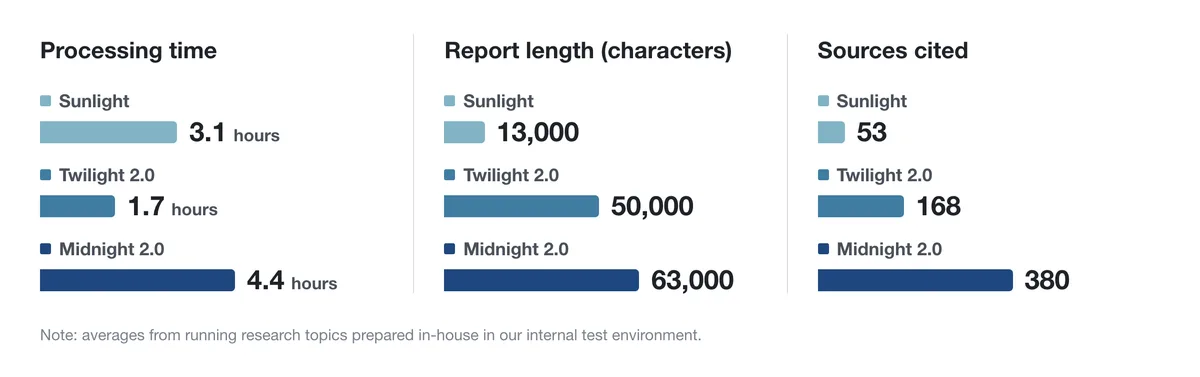
Processing time, report length and sources cited in the three modes
To use a new mode, simply choose it when you request research.
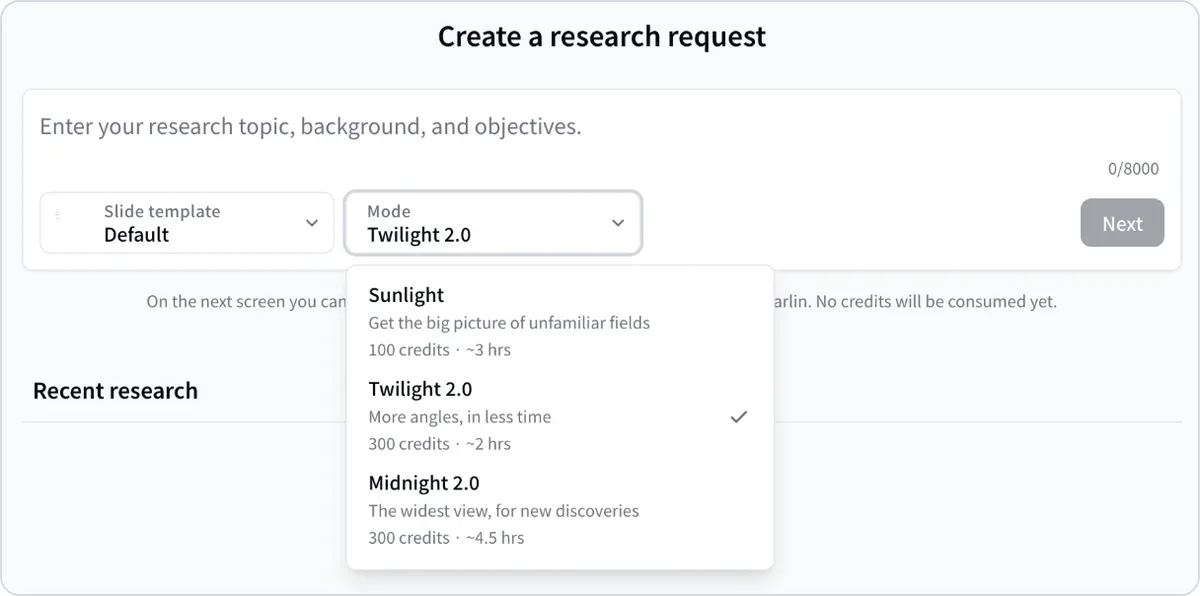
Choose a mode when you request research
2. Redesigned Slides: The Key Points of a Long Report, in the Slides Alone
The second update is a redesign of PowerPoint slide export. The new slides are available in all three modes: Sunlight, Twilight 2.0 and Midnight 2.0.
In Twilight 2.0 and Midnight 2.0 the research goes deeper, and the reports have grown longer with it. When there is no time to read the full text, or when you present the findings in a meeting, slides that pull the key points together matter more than ever.
So we strengthened slide generation so that the slides alone are enough to grasp the outline of the research. We developed a new dedicated harness for an AI agent to build slides, and built into it the know-how needed to make slides at a professional level. Working from that know-how, the agent reads the whole report, designs the storyline, assembles the slides, then checks the rendered result itself and fixes it.
The deck opens with a cover, a table of contents and an executive summary, and tells the whole report as a single story. Each slide states its message in a single headline sentence, draws the structure of the issues and their causal links as diagrams, shows quantitative data as charts, and carries source URLs. Slide templates are still supported, so the same content can be produced in your company’s template or one specified by a client.
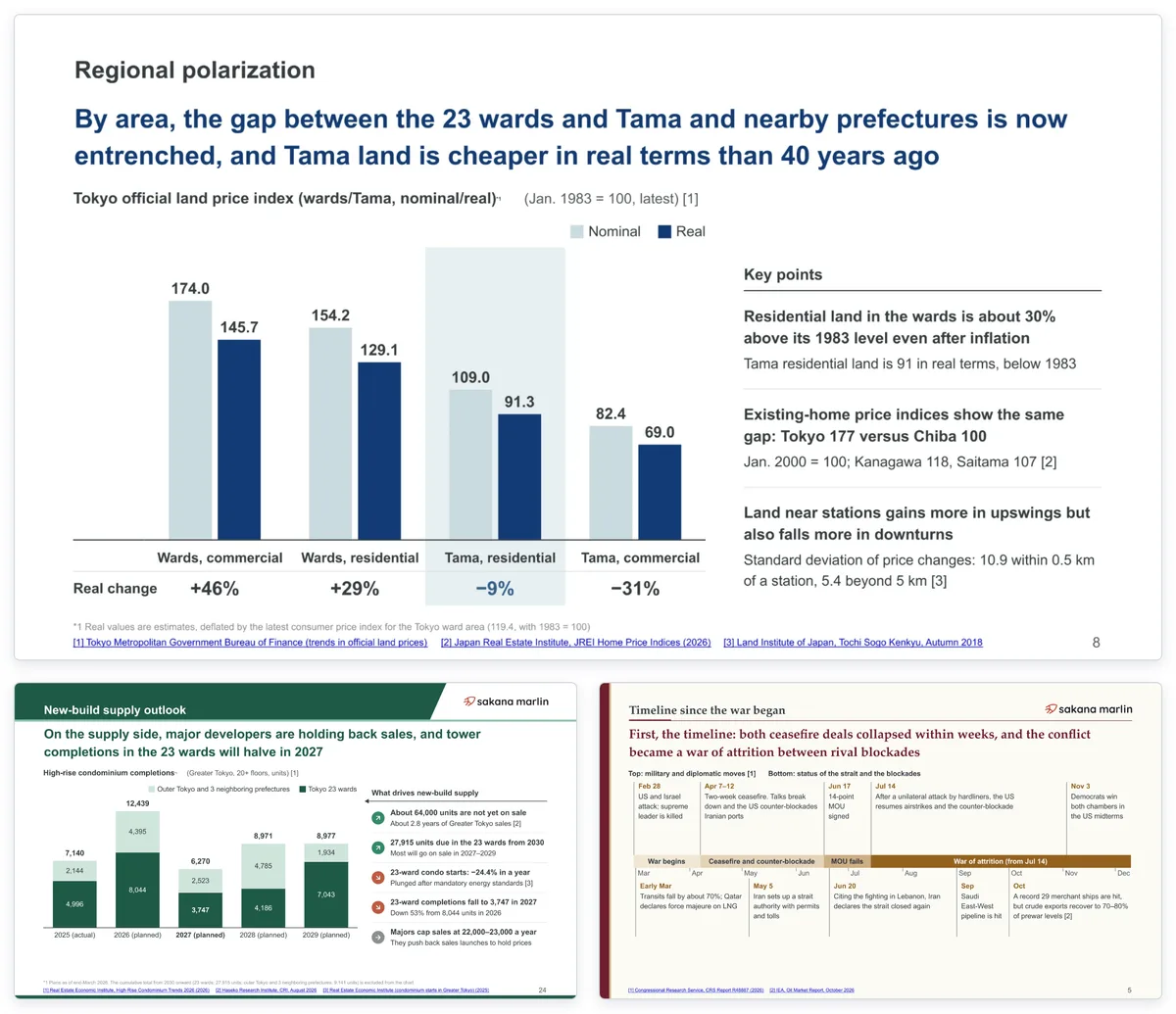
Example of the new output slides
However deep the research goes, it does not lead to a decision unless it gets across. Researching deeply, and conveying briefly: the new slides are there to deliver both from a single run.
See the Sample Reports for Yourself
The best way to see how the output has changed with the new modes is to look at an actual report. On the product page you can view and download sample reports and slides created by Sakana Marlin.
See the sample reports: https://sakana.ai/marlin/#usecase
Sakana AI’s products will continue working toward a world where people and AI are attuned to each other and better decisions follow.
Sakana Marlin is available on plans ranging from pay-as-you-go to Team and Enterprise. For pricing and the credits each mode uses, see the product page. The News section on the same page carries new features and other updates.
Try Sakana Marlin: https://sakana.ai/marlin/
The latest on Sakana Marlin: https://sakana.ai/marlin/news/
Microsoft and PowerPoint are trademarks of the Microsoft group of companies.
Sakana AI
Sakana AI is looking for people to help us shape the future of AI. Interested in joining us? Please see our career opportunities for more information.