English translation is being prepared.

Matched fieldsBody
Matched fieldsBody
DeepSeek has open-sourced DeepInfer, its self-developed inference framework that supports DeepSeek-V4.1-Flash, and published production data: a single cluster processes 155 trillion tokens per day, 96% input cache hit rate, 400ms first-token latency, and 230 tokens/s generation speed. The framework is customized based on vLLM and supports distributed inference, speculative decoding, SWA Bounded Replay, and structured output, with target platforms NVIDIA SM100 and Huawei Ascend 950. DeepSeek also states that components such as KV cache management and load balancing are not yet fully open-sourced, while the vLLM team says that under a matching GB200 configuration, decoding throughput is within 6% of the results published by DeepInfer.
DeepSeek has open-sourced DeepInfer, its self-developed inference framework that supports DeepSeek-V4.1-Flash, and published production data: a single cluster processes 155 trillion tokens per day, 96% input cache hit rate, 400ms first-token latency, and 230 tokens/s generation speed. The framework is customized based on vLLM and supports distributed inference, speculative decoding, SWA Bounded Replay, and structured output, with target platforms NVIDIA SM100 and Huawei Ascend 950. DeepSeek also
Matched fieldsBody
DeepSeek has open-sourced DeepInfer, the production inference framework supporting V4.1 Flash, and published production data including 155 trillion tokens processed per day on a single cluster, a 96% input cache hit rate, an average 400ms time to first token, and 230 tokens/s generation. The framework is customized based on vLLM and uses the Apache 2.0 license, supports distributed inference, speculative decoding, SWA Bounded Replay and structured output, and targets NVIDIA SM100 and Huawei Ascend 950. DeepSeek says components such as KV cache management and load balancing are not fully open-sourced because they are coupled with internal infrastructure, while the vLLM team reports that under matched GB200 configurations, decoding throughput differs from DeepInfer's published results by less than 6%.
ion inference framework supporting V4.1 Flash, and published production data including 155 trillion tokens processed per day on a single cluster, a 96% input cache hit rate, an average 400ms time to first token, and 230 tokens/s generation. The framework is customized based on vLLM and uses the Apache 2.0 license, supports distributed inference, speculative decoding, SWA Bounded Replay and structured output, and targets NVIDIA SM100 and Huawei Ascend 950. DeepSeek says components such as KV cach
Matched fieldsBody
Matched fieldsBody
Matched fieldsBody
Matched fieldsBody
Matched fieldsBody
Matched fieldsBody
Matched fieldsBody
Matched fieldsBody
Matched fieldsBody
Matched fieldsBody
Matched fieldsBody
Matched fieldsBody

Matched fieldsBody

Matched fieldsBody
Matched fieldsBody
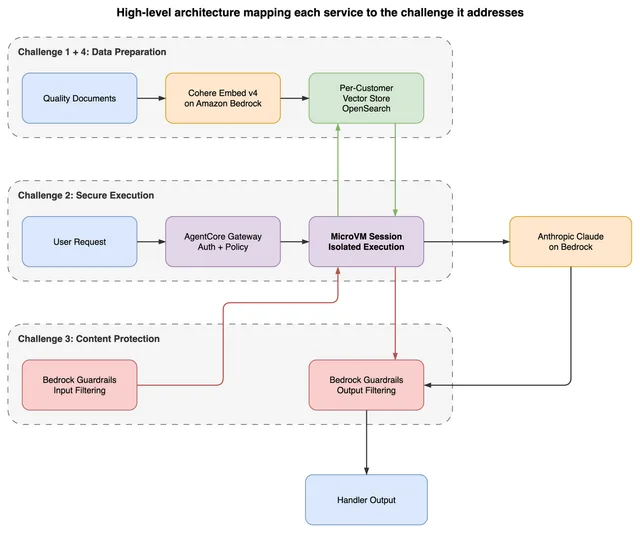
Octave built a three-tier multi-tenant AI foundation on Amazon Bedrock for the quality management platform Reliance, cutting deployment time per use case by 50%. The foundation uses Cohere Embed v4 to embed 2 billion documents, executes Anthropic Claude models through AgentCore Gateway and isolated microVMs, and Guardrails filters content on both the input and output sides. Reliance serves more than 650 enterprise customers across 180 countries.
Matched fieldsBody
Memory Tensor has open-sourced and released the MemT 1.0 series of memory-native models, including MemT-1.0-Nano with 36B parameters and 3B activated (based on Qwen3.6-35B-A3B) and MemT-1.0-Flash with 288B parameters and 17B activated (based on DeepSeek-V4-Flash), adding a memory computation pathway parallel to attention in selected Transformer modules. The team built a 34-billion-token memory training corpus, of which 20 billion tokens were used for continued pre-training and 14 billion for post-training. In a comprehensive evaluation across 11 memory benchmarks, Flash and Nano achieved average scores of 50.6 and 47.0, respectively, ranking in the top two among the parametric memory methods evaluated; on 500 SWE-bench Verified tasks, the proportion of tasks that Nano succeeded on all three attempts rose from 54.00% for the no-experience baseline to 62.80%.
t a 34-billion-token memory training corpus, of which 20 billion tokens were used for continued pre-training and 14 billion for post-training. In a comprehensive evaluation across 11 memory benchmarks, Flash and Nano achieved average scores of 50.6 and 47.0, respectively, ranking in the top two among the parametric memory methods evaluated; on 500 SWE-bench Verified tasks, the proportion of tasks that Nano succeeded on all three attempts rose from 54.00% for the no-experience baseline to 62.80%.
Matched fieldsBody
Matched fieldsBody