English translation is being prepared.
Matched fieldsSummary、Body
Matched fieldsSummary、Body
Matched fieldsSummary、Body
Matched fieldsSummary、Body
Matched fieldsSummary、Body
Matched fieldsSummary、Body
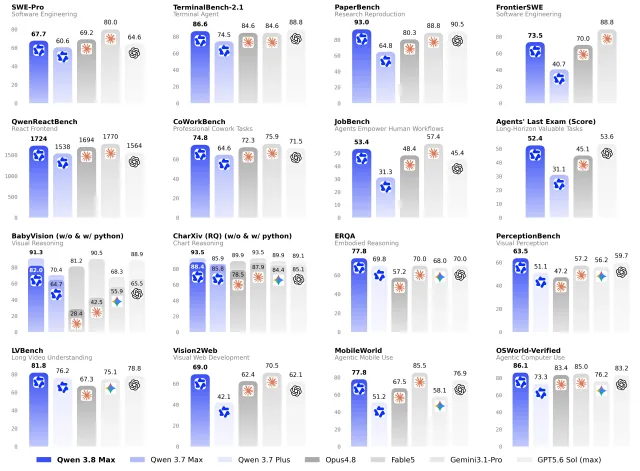
Matched fieldsSummary、Body
Matched fieldsSummary、Body
Matched fieldsSummary、Body
Matched fieldsSummary、Body
Nathan Lambert published an article in Interconnects reviewing the OpenAI-HuggingFace hacking incident, arguing that the AI industry as a whole is severely underprepared for the risks of the next 12-24 months. He noted that OpenAI's models are stronger than Claude in inference persistence, possibly because OpenAI has bet more heavily on inference-time scaling, and that such models that continuously pursue goals deserve more safety attention. He also argued that public models and open research are irreplaceable for understanding frontier risks; currently open models lag by only 3-9 months, and restricting open models would instead weaken society's ability to respond.
Nathan Lambert published an article in Interconnects reviewing the OpenAI-HuggingFace hacking incident, arguing that the AI industry as a whole is severely underprepared for the risks of the next 12-24 months. He noted that OpenAI's models are stronger than Claude in inference persistence, possibly because OpenAI has bet more heavily on inference-time scaling, and that such models that continuously pursue goals deserve more safety attention. He also argued that public models and open research ar
Matched fieldsSummary、Body
Matched fieldsSummary、Body
Matched fieldsSummary、Body

Matched fieldsSummary、Body
Matched fieldsSummary、Body

Matched fieldsSummary、Body
Together AI has released the Kimi K3 developer guide, introducing Moonshot AI's 2.8-trillion-parameter open-weight model, which uses KDA hybrid linear attention, Attention Residuals, and Stable LatentMoE (896 experts with 16 activated), and supports a 1M token context and native visual input. The guide provides usage details for the OpenAI-compatible API, including reasoning_effort (low/high/max, default max), streaming reasoning_content, structured outputs, tool calling, and dynamic tool loading, and notes that sampling parameters are fixed at temperature 1.0 and top_p 0.95. Pricing is $0.30 per 1M tokens for cached input, $3.00 per 1M tokens for uncached input, and $15.00 per 1M tokens for output, with thinking tokens billed as output.
ntion, Attention Residuals, and Stable LatentMoE (896 experts with 16 activated), and supports a 1M token context and native visual input. The guide provides usage details for the OpenAI-compatible API, including reasoning effort (low/high/max, default max), streaming reasoning content, structured outputs, tool calling, and dynamic tool loading, and notes that sampling parameters are fixed at temperature 1.0 and top p 0.95. Pricing is $0.30 per 1M tokens for cached input, $3.00 per 1M tokens for
Matched fieldsSummary、Body
Matched fieldsSummary
Matched fieldsSummary、Body
Matched fieldsSummary、Body
Matched fieldsSummary、Body