 AI Trends
AI News Daily
AI developments selected from public sources
- 12
- major stories
- 46
- sources
- 5
- first-party stories
Lead story
OpenAI Releases System Cards for GPT-6.2 Astra and GPT-6.2 Sol
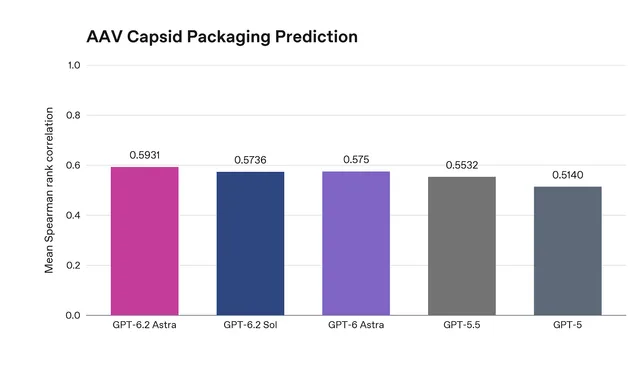
OpenAI releases GPT-6.2 Astra and GPT-6.2 Sol, calling them its most capable externally deployed models to date; both reach the Critical cybersecurity threshold and the High biochemical threshold in the Preparedness Framework. GPT-6.2 Astra also reaches the High AI self-improvement threshold, making it OpenAI's first externally released model to cross that threshold, while GPT-6.2 Sol does not. Accordingly, OpenAI tightens default limits on high-risk cybersecurity assistance, requires stricter access review, and adds a new Control Room system to track model load across research infrastructure.
Model releases / updates
Microsoft Releases MAI Code 2 and MAI Code 2 Flash Coding Models
Microsoft released two models, MAI Code 2 and MAI Code 2 Flash, aimed at everyday enterprise coding tasks. The company says that averaged across four benchmarks, MAI Code 2 reaches 98% of GPT 6.1 Sol's performance at 40% of the cost, and 96% of Claude Opus 5.5's performance at 5% of the cost. Both models are now available on GitHub Copilot, and Code 2 Flash is in limited preview on Microsoft Foundry.
Product release/Updated
Google Launches Task Mode for Gemini, Enabling Calls, Bill Payments, and Shopping
Google updated Gemini so it can handle complex tasks such as appointments, bill analysis, and shopping, completing actions by connecting to users' email, calendar, and payment methods. The feature is based on the Gemini 4 Hydrogen model and is available for free in the US, Japan, South Korea, Canada, Australia, and India, with advanced features launching first in the US. Gemini runs in hardware-isolated virtual machines and includes prompt-injection filtering and confirmation for key steps; users can switch the toggle in the Gemini app from Chat to Task to use it.
Replit Launches Missions: Agent Swarms Deliver Goals Within Budgets and Boundaries
Replit released Missions, in which users set goals, budgets and approval boundaries, and a swarm of agents plans, builds, tests and iterates in parallel. The company used it to build its own application monitoring platform DataCat in 2 days on a $3,000 budget, and open-sourced a self-hostable version; on 13 NumPy benchmark tasks, a swarm of 32 agents achieved higher speedup ratios than a single agent.
Microsoft Launches MAI Licensed Weights, Enabling Deployment and Customization of MAI Models in Customers' Own Azure Environments
Microsoft launched MAI Licensed Weights, allowing enterprises to deploy and customize Microsoft AI models in their own Azure environments, with data and adaptation results owned by the enterprise and used by Microsoft for training only with explicit consent. The company says customers can achieve frontier-level or better performance on specialized tasks after adaptation at significantly lower cost: AT&T uses MAI to analyze its 5G network, achieving better performance on standard tasks at one-fiftieth the cost of GPT-6.1 Sol; Woven by Toyota uses MAI Code 2 Flash to fix code, with 44% of cases producing directly mergeable fixes at less than one-tenth the cost of the previous frontier model; Alaska Airlines raised the classification accuracy of aircraft maintenance reports from 81.2% to 91.1%. The product will be launched through a Frontier Company partnership.
Industry news
Nvidia Says It Does Not Plan to Reappoint Jensen Huang as CEO
On its earnings call, Nvidia said its leadership is not considering bringing founder Jensen Huang back as CEO, with Chairman Harvey C. Jones saying the company is searching internally and externally for a permanent successor. Huang previously said on X that he would be willing to return if the board believed it was in the interests of shareholders, employees, the company, and the United States. Huang resigned last week after multiple extramarital affairs came to light, one of the women alleged to be a Chinese intelligence operative; the Nvidia board has launched an independent investigation into his activities, and the SEC has also opened an investigation into Nvidia. The current interim CEO is Chief Financial Officer Colette Kress.
Jensen Huang Says He Is Willing to Return as Nvidia CEO If Board Agrees
In his first public statement since resigning as Nvidia CEO, Jensen Huang said he is willing to return to the CEO role if the board believes it is in the interests of shareholders, employees, the company, and the United States. According to the Financial Times and The Wall Street Journal, Nvidia's board is not considering reinstating him, and the company will report quarterly earnings after the bell on Tuesday. Huang resigned last week over a relationship with Alice Huang, who is suspected of being a Chinese spy, and related issues involving several direct reports; the board has launched an investigation into national security implications and formed a committee to oversee export and national security matters. The US government confirmed that the Commerce Department and the Justice Department have been investigating Megaspeed since 2024, and Nvidia placed it on an internal banned-sales list in June 2025.
Anthropic IPO Expected to Price Above Preliminary Range of $70 to $78 per Share
CNBC's David Faber, citing multiple sources, said Anthropic's IPO is expected to price above the preliminary range of $70 to $78 per share, with the final price expected to be set on November 18, 2026, and trading to begin on Nasdaq on November 19 under the ticker ANT. The offering covers 825 million Class A shares and includes a $26 billion private placement of Class N shares, with subscription commitments from AMD, Broadcom, Google, Micron, Microsoft, NVIDIA and TSMC Partners. Revenue for the nine months ended September 30, 2026 was $33.24 billion, up about 1,200% year over year, while the net loss for the same period was $104 billion, mainly from fair value changes in convertible notes and derivative liabilities.
AMD Completes $8.2 Billion Acquisition of World Labs, Fei-Fei Li Appointed Executive Vice President and Chief Scientist
AMD announced on November 16 that it had completed its acquisition of World Labs, issuing 14.978 million ordinary shares to former shareholders in an all-stock deal valued at about $8.2 billion, with closing completed on November 13. World Labs co-founder Fei-Fei Li became AMD's executive vice president and chief scientist, reporting directly to Lisa Su, while the other two co-founders, Justin Johnson and Ben Mildenhall, remain; the team will continue advancing foundation model research as an independent frontier research organization within AMD. This is AMD's second-largest acquisition ever, after the roughly $49 billion Xilinx deal in 2022; World Labs had previously released the world models Marble and Atlas.
Anthropic Files Amended IPO Document, Net Proceeds of About $84.6 Billion at Midpoint Pricing
In the third amendment to its IPO registration statement filed on November 17, Anthropic disclosed that after the IPO, Amazon and Google will hold 14.7% and 13.7% of its outstanding share capital, respectively. Based on the midpoint of the $70 to $78 per share offering range, $74, the company expects net proceeds of about $84.6 billion, or $93.7 billion if the underwriters' over-allotment option is exercised in full. The filing also shows that the concurrent $26 billion private placement consists of $10 billion each from Google and NVIDIA, $2.5 billion from AMD, $1 billion each from Broadcom, Micron and Microsoft, and $500 million from TSMC.
SEC Reportedly Opens Civil Investigation Into Nvidia; Jensen Huang Has Resigned
According to The Wall Street Journal, the SEC is conducting a civil investigation into whether Nvidia's disclosures misled investors. The matter follows the resignation of CEO Jensen Huang after rumors of an extramarital affair, the US Commerce Department's investigation since late 2024 into whether Singapore-based data company Megaspeed diverted some Nvidia chips to China, and congressional demands that Huang explain the relationship and its impact on his stance on export restrictions. Nvidia reported revenue of $115.8 billion for the quarter, up 103% year over year, but its stock has fallen more than 10% since Huang's resignation.
Demis Hassabis Announces Isomorphic Labs Raises $500 Million
Demis Hassabis announced that Isomorphic Labs has raised $500 million to accelerate its goal of "solving all diseases." He said the team is using AI to redesign drugs from first principles to greatly shorten the time and cost of new drug development.
Briefs
- Alibaba Cloud Qwen4-Max Preview Launches on Qwen AI and Bailian Platforms, Token Plan Also OpenAlibaba Cloud Developer Community AIFollow-up
- Calif used AI to discover the OpenJDK vulnerability Java4Shell; OpenJDK and Oracle released fixes the same dayUnite.AI
- NVIDIA establishes National Security Committee, first major adjustment after Jensen Huang's resignationTechCrunch AI
- Google releases Gemini 4 Hydrogen model and Antigravity robotics pluginGoogle Developers Blog
- Ed Zitron long read: How the NVIDIA bubble props up and holds back the AI industryEd Zitron long read / Where's Your Ed At
- Microsoft releases MAI Image 2.7 and 2.7 Flash image modelsMicrosoft AI Blog
- Huawei Cloud releases its first Ascend-native embodied world model, CloudRobo-WM1.2Phoenix Technology
- Perplexity launches Multiagent feature, can orchestrate multiple models in parallelAravind Srinivas
- GPT-6.2 Astra sets a new record on Agents' Last ExamVaibhav Srivastav
- Vals study: mainstream AI models can be tricked into marking civilian targets when the task is disguised as a gameTechCrunch AI